Posts

Showing posts with the label music

Stiles in the Carpathians

Image
Stiles, or perelazy in Ukrainian, are structures that provide people with a way to easily pass over a fence while at the same time preventing farm animals from passing through. Stiles are found in the countryside around the world and come in all kinds of forms. In the Carpathians, they are typically made of wood, and even in just one village I came across several different types. Perelazy from the beautiful Hustul village of Kryvorivnia Perelazy have even found their way into Ukrainian folklore: there are dozens of folk songs that feature perelazy in their texts. Ой не світи, місяченьку та й на той перелаз  (Oh, moon, don't shine on that perelaz) In fact, you can even karaoke sing about perelazy ! Перелаз, мій перелаз (Perelaz, my perelaz)

Warszawska Orkiestra Sentymentalna: Reawakening Polish Prewar Urban Music

Image
Late last year I had the opportunity to immerse myself in the atmosphere of Lviv's interwar music scene at a live performance of a young band from Warsaw, which plays famous tunes from Poland's 1920-1930s musical heritage. Warszawska Orkiestra Sentymentalna (Warsaw Sentimental Orchestra) comprises a group of young musicians united by their passion for urban folklore. They play familiar and forgotten dance melodies as well as more sentimental tunes for singing and listening. Their repertoir includes songs from prewar theaters, courtyard ballads and couplets from interwar Warsaw and Lviv. The also play compositions by modern artists inspired by urban folklore and traditional Polish melodies, and enliven dance parties with their lively polkas and foxtrots, sultry tangos, and romantic waltzes. The orchestra reaches to the roots of the Polish prewar music scene and continues the tradition of revue performaces, maintaining the timeless charm of these songs while adding their o...

'Krajka. W domu': Forgotten Music from Polish-Ukrainian Borderland

Image
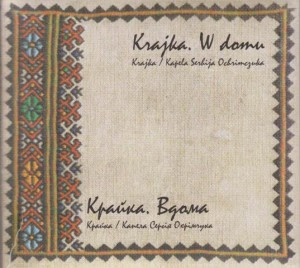
A folk band from Przemysl  —  Krajka, together with Ukrainian musicians  —  released a new album dedicated to the lands that lie along the current Polish-Ukrainian border. "The album contains traditional music from the Polish-Ukrainian borderland, from the regions of Kholm, Lubaczow, Przemysl, to the Carpathian mountains and valleys. These lands were once replete with the splendor and richness of culture, traditions, and ethnos. Today this music is largely unknown and forgotten. It has been reconstructed using recordings gathered during field expeditions and from available materials  —  to save it from oblivion and bring back its ancient luster." "The album 'Krajka. W domu' contains songs exclusively from the Polish-Ukrainian borderland. This territory, on which from time immemorial reigned a balance of diverse cultural components, was brutally destroyed by the war and postwar deportations. The expulsion of Ukrainians, Boykos, and Lemkos is above ...

Sangre de Muerdago: Interpreting Melodies Once Lost and Found Again

Image
The Galician (Spain) folk band Sangre de Muerdago released a new EP "Os Segredos da Raposa Vermella"  (The Secrets of the Red Fox) "Before humans started building with concrete and steel, much earlier before machines reigned, and the steam locomotive was invented. There was a little red fox that wandered through the woods of the Iberian northwest, in a land where its people were  known as the Galaicos. This red fox liked to listen to the melodies of the leaves and the stones, to the songs of the streams and flowers, and she sung and sung and whistled as she wandered through the forests looking for food and adventures. Until one day she knew so many songs, more songs than any other red fox in those woods. Even more songs than the ravens themselves. Afraid of forgetting those beautiful melodies, she decided to start writing a little book with her favourite songs. The book had a cover of moss and paper of birch bark, and on its pages she wrote and drew. Many ...

Searching for Traces of the Lipińskis in Oleskiy Region

Image
My great (x5) grandparents Feliks and Tekla Lipiński moved to the village of Koltiv (Kołtów) from Lviv in 1811. Feliks was invited by Count Józef Baworowski to his estate in the countryside to conduct his court orchestra. The former landlords, the Starzeńskis, built a beautiful garden house on a high hill where the court orchestra would often play. Feliks and Tekla's son, the famous violinist and composer Karol Lipiński , often visited them in the village. Nothing of the garden house, the palace, the graves of the noblemen or my relatives, or any other traces of these times remain. Much was destroyed during WWI, and in WWII Koltiv found itself on the front. While Brody is remembered for the "Brody Cauldron" when in 1944 the Red Army encircled Brody and destroyed the German forces, the neighboring region was called the "Koltiv Corridor," due to the fact that the German front in the Koltiv area was shattered by the Soviet army, which broke through a narrow gap i...

Dakha Brakha: Ethno-Chaos Band

Image
DakhaBrakha is an "ethno-chaos" band from Kyiv, created in 2014. They have gained a following around the world, have toured extensively, and have even performed an NPR Tiny Desk Concert and as well as on KEXP. "Having experimented with Ukrainian folk music, the band has added rhythms of the surrounding world into their music, thus creating bright, unique and unforgettable image of DakhaBrakha. It will help to open up the potential of Ukrainian melodies and to bring it to the hearts and consciousness of the younger generation in Ukraine and the rest of the world as well," from their website . One of the songs that stands out most to me, due to the music as well as the lyrics, is the song "Ванюша" (Vaniusha), the events of which take place during the Seven Years' War (1754-1763). I wonder whether this song was truely passed down for two and half centuries. The lyrics are quite dark and gruesome, however, so it is hard to believe it is documenting...

Burdon Folk Band

Image
Burdon, formed in 2002 in Lviv, is a great example of a band that preserves and promotes folk music, allowing a new generation of people to enjoy and cherish the music of their ancestors. "We're using acoustic folk instruments for the best reproduction of atmosphere of old dances which didn't change through centuries. But our music is not a real authentic reflection, we play modern folklore. We don't invent any new tunes, we play old and often very famous ones, with our own arrangement and modern influences." from their website . In additional to more common instruments such as the fiddle, double bass, accordion, they also incorporate many other interesting instruments such as the lira (hurdy-gurdy), bouzouki, and moraharpa. In addition to  traditional Ukrainian and Carpathian songs, they also play Romanian, Hungarian, Balkan songs.

Warsaw Village Band: Preserving the Folk Music Culture of Poland

Image
"Presenting six young people who have created their own version of Polish folk punk! This band has found a welcome in the homes of elderly village musicians who see their traditions disappearing before the onslaught of urban life. They have taken these youngsters under their wing and have taught them the ancient repertoire. The band describes "Cranes" as "an anarchistic protest song; a classic example of defiance and disobedience and a lesson for contemporary societies...Go back home children and be nobody's servants."" from Link TV . "In other moments, the Warsaw Village Band finds comic contemporary possibilities in older tunes. The liner notes to People's Spring describe "Who Is Getting Married" as "a feminist composition, an example of contemporary ideas on emancipation, which apparently existed in the former Polish countryside. "The song's female protagonist sings a tale of not wanting to be married,...

Tem Eyos Ki: 'Cruithne'

Image
when it comes the day that I'm spit out what have I learned?  what folklore will I keep?  could it be that I shared thoughts with my progenitors? did as they did, kissed words they've kissed intrinsically chaotic dependent attracted, suspended to understand to allow the stories to sink deep when it comes the day that I'm spit out what have I learned?  what folklore will I keep?  could it be that I shared thoughts with my progenitors?  did as they did, kissed words they've kissed cruithne cruithne cruithne  could it be cruithne... <a href="http://harlanrecords.bandcamp.com/album/tem-eyos-ki-lp-remixed-remastered">Tem Eyos Ki-- LP (remixed/remastered) by Tem Eyos Ki</a> scarred warrior throats long winded legends familial lines  faces etched in skies co-orbital motion forced thousands of years  listening, they're listening, i'm listening listening, th...

Rail Yard Ghosts: 'Call of the Void'

Image
can you hear their voices now the songs of our dead alive only in the stories and the bones we carry their ashes tattooed on our faces whispers of our scattered tribe on this earth they ramble on and we ramble on to unearth the songs from the void ... finding depth in empty spaces and life in the complexity of silence the beauty and sadness of fleeting time and all that we cannot hold we've rebuilt with worn hands using the dirt from underneath our fingernails and other remnants of the past we've collected to help tell the tale of ourselves as the pieces escape our grasp we sleep in a bed of memories for the people and places we love that we can no longer reach an insatiable desire within us for the intangible the bricks are each other yet ever fading we feel the ground beneath our feet so vividly only to watch it diminish and see it was never there suspended above all we cherish as it fades away like we must onto our own s...

Josyfa Kühn 2x

Image
In the eighteenth century in/near Lviv there lived a a nun and poet named Josyfa Kühn. The following century in Brody, Galicia, there lived a woman named Josyfa Kühn, the daughter of a German merchant (picture of her can be found in this article ). The latter was my great-great grandmother. While the only connection between these two women is their name, I nevertheless feel a connection to the nun, who is famous for a series of poems she wrote about the outskirts of Lviv (written in German). Furthermore, she is known in Ukrainian pop culture due to the poem about her written by contemporary Ukrainian writer Yuriy Andrukhovych and the song using this text by the rock group Mertvyi Piven. Unfortunately, I haven't been able to find an online version of the song, but here's the poem: Йосифа Кун. Дух Дозволь мені кружляти над тобою. Я знав Йосифу Кун, я знав ще кількох жінок. Песій Ринок вітав мене песім гавкотом, А черниці з вулиці Сакраменток Ховалися в ніша...

My Ancestor Karol Lipiński: Violinist and Conductor in Lviv's First Theater

Image
Lviv has always felt like my native town; however, in recent times none of my ancestors were from here. But in the last few years I discovered that my direct ancestors on two sides of my family (Polish and Austrian) did live in Lviv, but over 200 years ago, in the early 1800s. The Lipińskis My great-great-great-great-great grandfather was Feliks Lipiński. "Born in 1765 in Zakliczyn near Tarnow, his life had presumably followed a course similar to that of other talented peasant children. He may have been educated in music in one of the numerous monasteries and then probably took up a teaching career at aristocratic courts where he tutored his charges in playing several instruments." "The end of the 18th century saw Feliks Lipinski in the estate of the Potocki family at Radzyn near Lublin. His first born was the son Karol Jozef who came into the world on 30 October 1790." Potocki Palace (built 1750-1759) in Radzyn, Poland Karol Lipinski It was this s...

Maramaros: 'The Lost Jewish Music of Transylvania'

Image
"If the real Jewish music of Transylvania is gone, this disc makes sure it will not be forgotten."  - See more  here .

Boyko Music: 'At the Foot of the Carpathian Chain'

Image
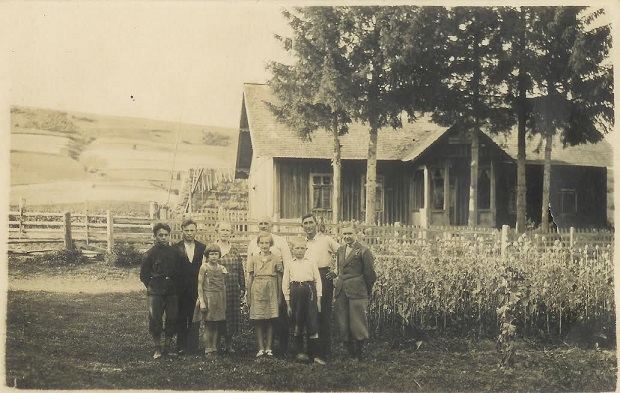
My paternal grandfather was born in the village of Lybokhora (Turka District), the "capital" of Boyko instrumental music. His parents, who were from the Sambir and Lviv regions, moved to this Carpathian village in the early 1900s to direct and teach at the local school. This is a picture from Lybokhora (1930s) of my grandfather (white shirt in second row, with bird on his shoulder) with his parents, siblings, and some family friends.  Many years ago I came across an album of authentic music recordings from his village. When I listen to it, I can image that during celebrations and rituals, my ancestors heard precisely this music. Links with info and downloads: http://lemko.org/lvpro/turka.html http://www.ex.ua/7952774 http://www.discogs.com/

EuroMaidan Anniversary: 'A Line from My Autobiography'

Image
Today marks the second anniversary of the beginning of the Revolution of Dignity, or EuroMaidan, which ended the rule of Yanukovych in Ukraine. I'd like to share a video for a song based on a text by contemporary Ukrainian writer Oksana Zabuzhko called "A Line from My Autobiography." The song is performed by the Telnyuk Sisters, and the video shows images from the revolution: Ukrainians fighting for their freedom, dignity, and land, including the violent battles. The text is basically about how "my ancestors" have always been fighting for their land, which has always belonged to them. And ends with these words: Oh and they were a strong breed — * Solovky, Magadan, Kolyma... My ancestors were a people — A people, which is no longer. * names of Soviet prison camps РЯДОК З АВТОБІОГРАФІЇ Мої предки були не вбогі На пісні та свячені ножі — З моїх предків, хвалити Бога, Заволокам ніхто не служив! Дарували від батька до сина Чест...

NPR: Tigran Hamasyan – Exploration of Ancient Sacred Music from Armenia

Image
From NPR : "'In Armenia, after the Soviet Union and almost a hundred years of atheism, a lot of things have been, I don't want to say forgotten, but haven't developed greatly,' he told his record label. 'The music was in the shadow.'" "But the shadows are receding, at least a little. With Luys I Luso, Hamasyan is shining his own unique light on his homeland's ancient traditions." Supposedly, a great grandmother of mine was Armenian. The story goes that a great grandfather of mine, Antin Levytskyi, was a Zaporizhian Kozak (probably early 18th century) and when he was wounded he was taken care of by an Armenian woman, Miriam, whom he later married. So I also feel some very distant connection to Armenia.

Orkiestra św. Mikołaja: 'From the High Field'

Image
"Z wysokiego pola" (From the High Field) is one of my favorite songs by Orkiestra św. Mikołaja.  The melody of the song is Hungarian,  while the text is a Polish ballad from the region near  Zamość —   an ancestral land.  In the early nineteenth century my great 4x grandfather had an estate in Zalesie. His son, my great 3x grandfather was born in 1822  Łabunie,  the nearby village. Even before I found the connection between the song and my ancestral land, I was always very moved by the song. Something about the melody and lyrics really struck me. The lyrics in Polish and English are below. I also like the image used in the video  —   women in folk costumes against the background of brick ruins. Z WYSOKIEGO POLA Z wysokiego pola, z rajskiego podwórza Zakochał się Jasio w Maniusi jak róża. Gdy się Mani matka o tym dowiedziała, Poszła do murarzy, murować kazała. Murarze, murar...